
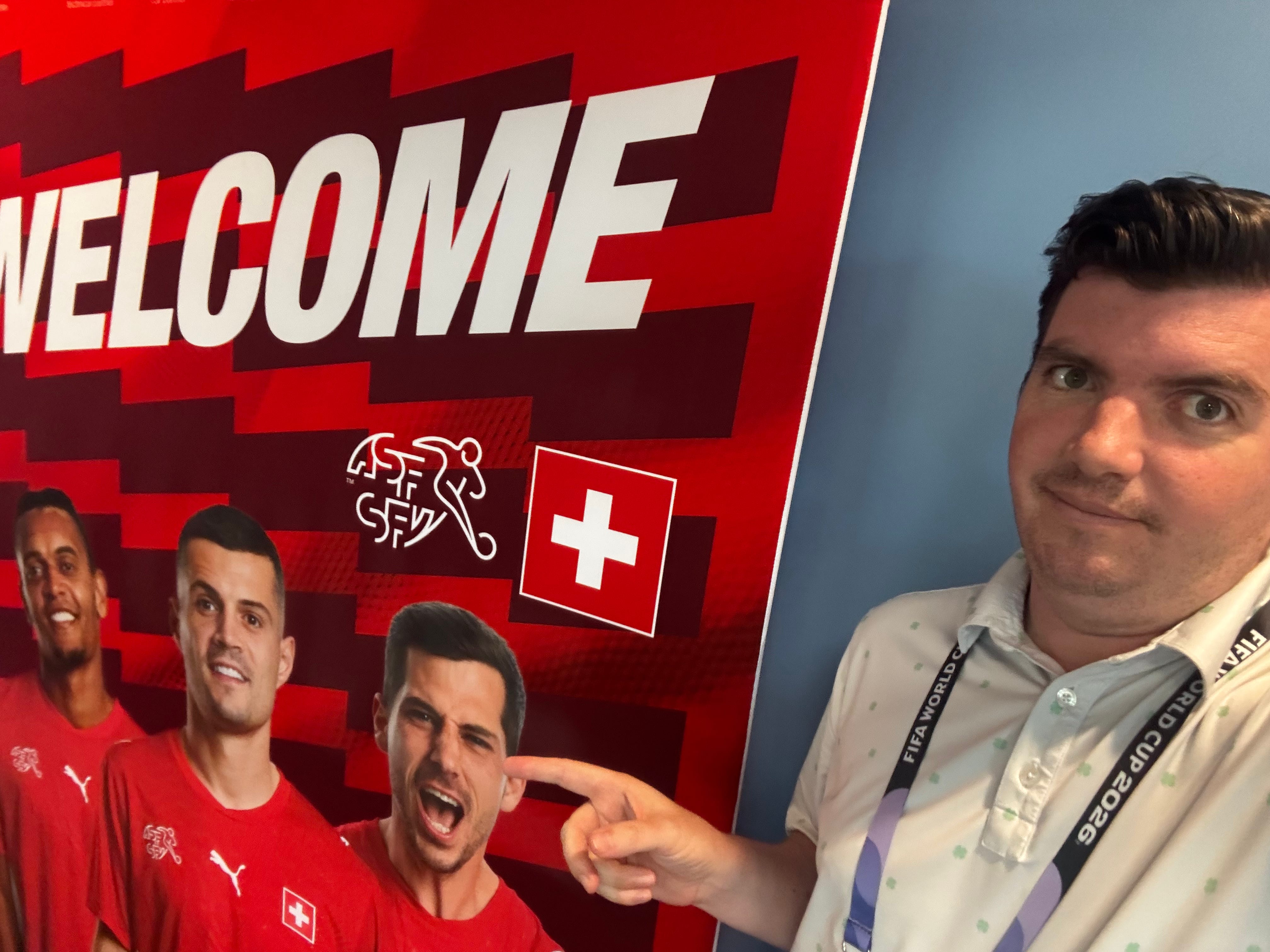
San Diego showed its best face this week as the Swiss national soccer team arrived for a training session and media event at the San Diego Jewish Academy.
Beneath clear blue skies and perfect Southern California weather, Swiss national team players fired laser-guided scrimmage passes that seemed to operate under a different set of physical laws than anything I managed during seven memorable years of AYSO soccer. Balls traveled forty yards with remarkable precision, arriving exactly where intended and often stopping at a teammate’s feet on a dime. Reporters lined the touchline while FIFA security quietly monitored the perimeter. For a few hours, a community soccer field in San Diego felt like the center of the football world.

As a local observer and longtime fan of both sport and community life, I was struck not only by the players’ elite-level skill, but by how perfectly San Diego fit their needs. The city's hospitality, world-class training facilities, near-perfect weather, and relaxed coastal atmosphere make it a natural staging ground for teams preparing to compete on the world's biggest stage.
The team was exceptionally accommodating to local media. Adam Benmoise and his team at the SDJA did a great job with a thoughtfully organized press area, complete with refreshments and workspace, made coverage both easy and efficient. Super nice guy too. While many of the questions and answers were conducted in Swiss German and French, enough English was sprinkled throughout the conversations to follow the key themes. Later, watching Swiss television coverage with subtitles helped fill in the details and provided additional context.
The team is staying at the five-star Grand Del Mar, a choice that highlighted one of San Diego’s greatest strengths as a host city: world-class accommodations that are close to premier training facilities, yet secluded enough to provide the privacy, comfort, and recovery environment elite athletes require.

On the field, the Swiss players were an absolute joy to watch. Their warmup drills highlighted why they’re among the world’s best: laser-precise passes that barely left the turf, spins and “English” on the ball that stopped deliveries dead at a teammate’s foot, and a level of ball awareness that makes complex plays look effortless.
What surprised me most was how much faster everything looked in person. Television captures the game, but not the pace. Passes arrived harder, movements were sharper, and every touch seemed intentional. The difference between elite international players and even very good players is difficult to appreciate until you see it from a few yards away.
The team also worked through a series of balance, coordination, and multitasking drills that were fascinating to watch. Players walked atop exercise balls while simultaneously kicking soccer balls and juggling smaller balls, forcing them to maintain balance, focus, and awareness all at once. It was a vivid reminder that elite training extends far beyond simply striking a ball. Every exercise appeared carefully designed to improve reaction time, peripheral vision, body control, and decision-making under pressure—skills that can make the difference between winning and losing at the highest levels of the sport.
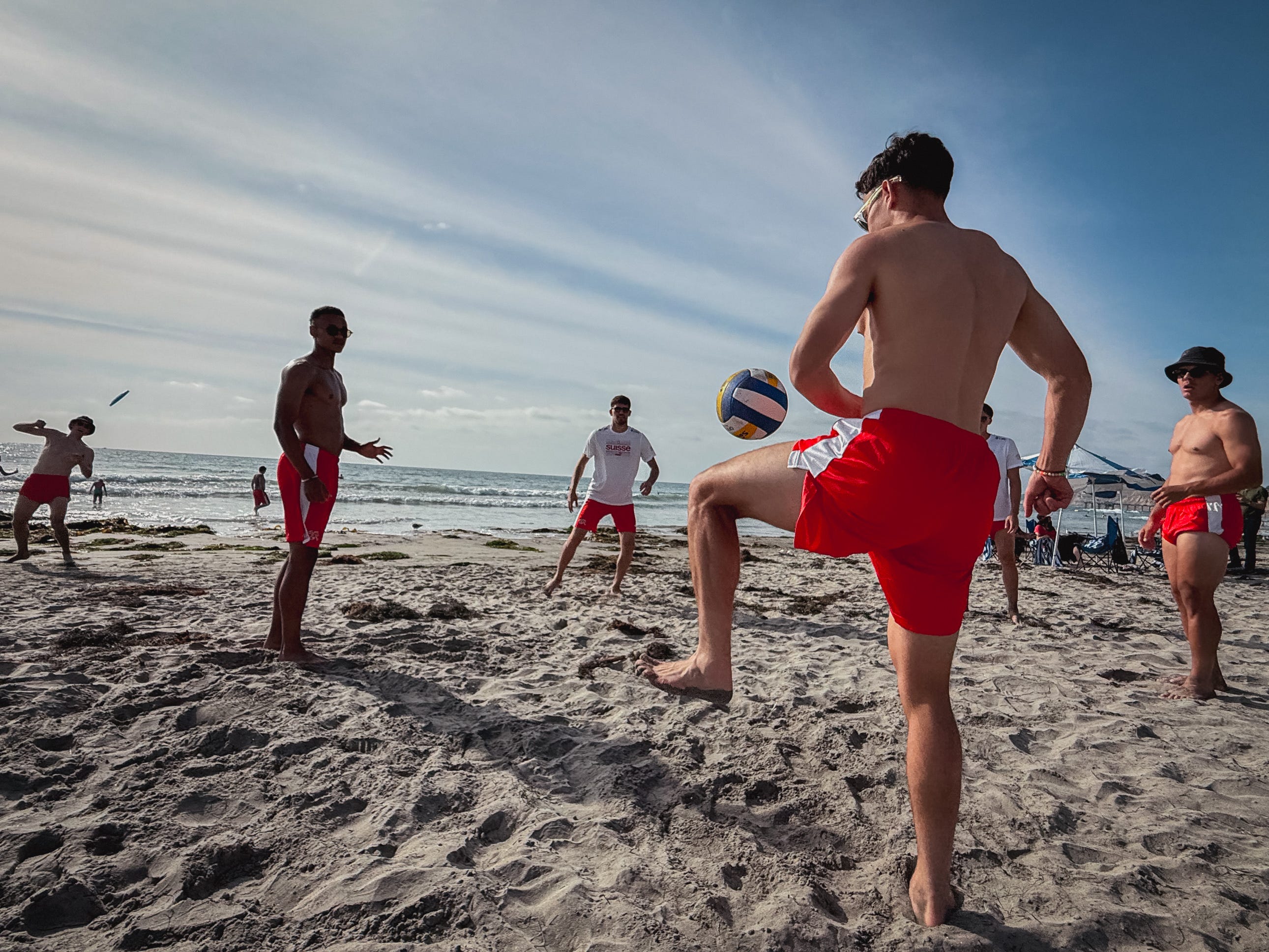
The players were also enjoying San Diego away from the training ground. Team members spent time exploring La Jolla, taking advantage of the coastline, restaurants, and relaxed atmosphere that have made the area a destination for visitors from around the world. The sentiment extended beyond the players. While taking in the ocean views, one Swiss photographer summed up the experience to a colleague in a simple observation:
"It's paradise here, man."
For athletes facing the intensity of a major international tournament, San Diego offers a rare combination of elite facilities and genuine opportunities to unwind.

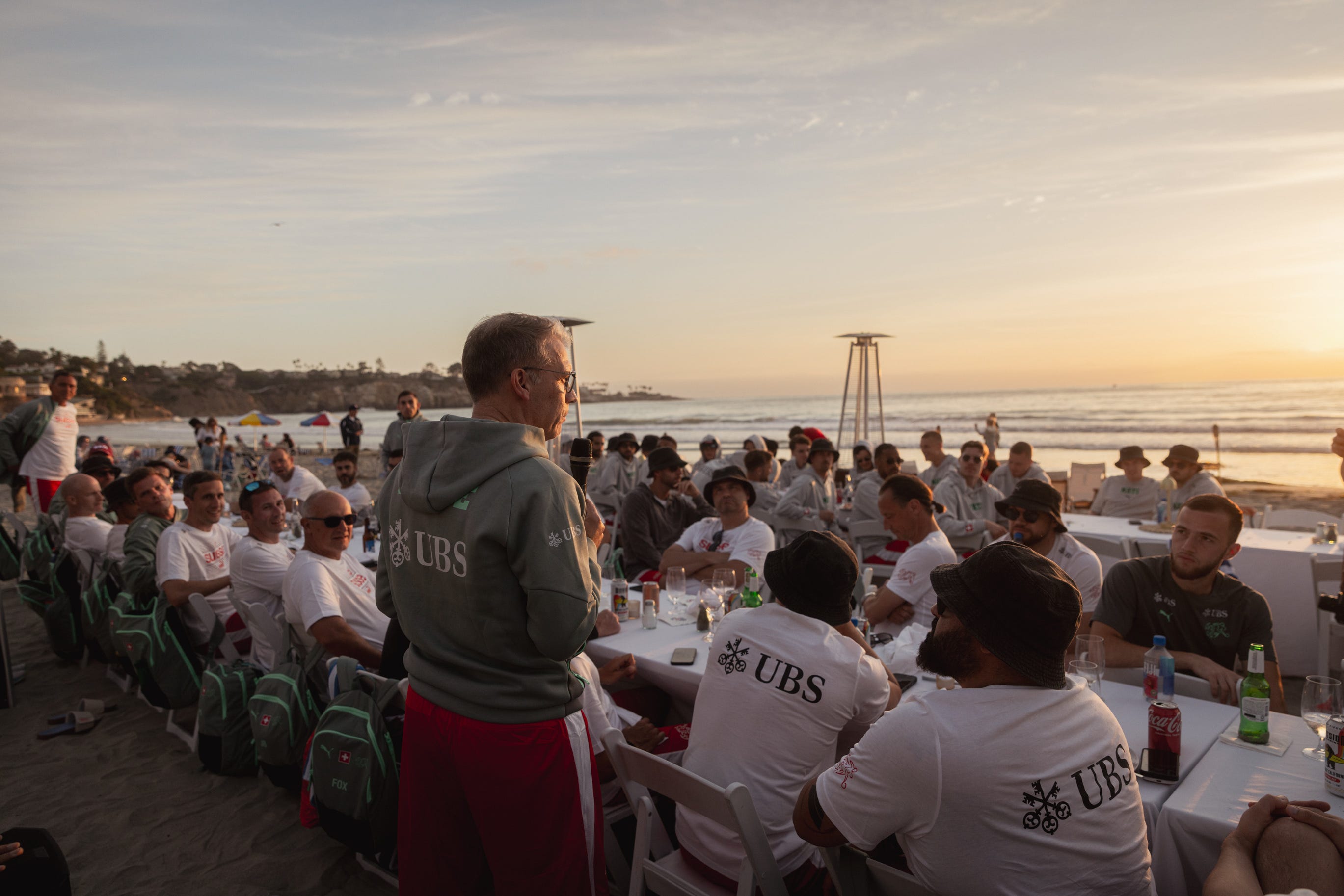
Physically, the team looked every bit like elite athletes: lean, powerful legs and an explosive, controlled speed that hinted they were still operating below full match intensity. The coaching staff matched that professionalism—organized, polished, and intensely focused—while FIFA security and event logistics underscored the global scale of World Cup operations even at a local training session.
One of the more amusing storylines involved rattlesnakes.
Prior to arriving in SoCal, some Swiss media coverage pointed out the region’s rattlesnake population.
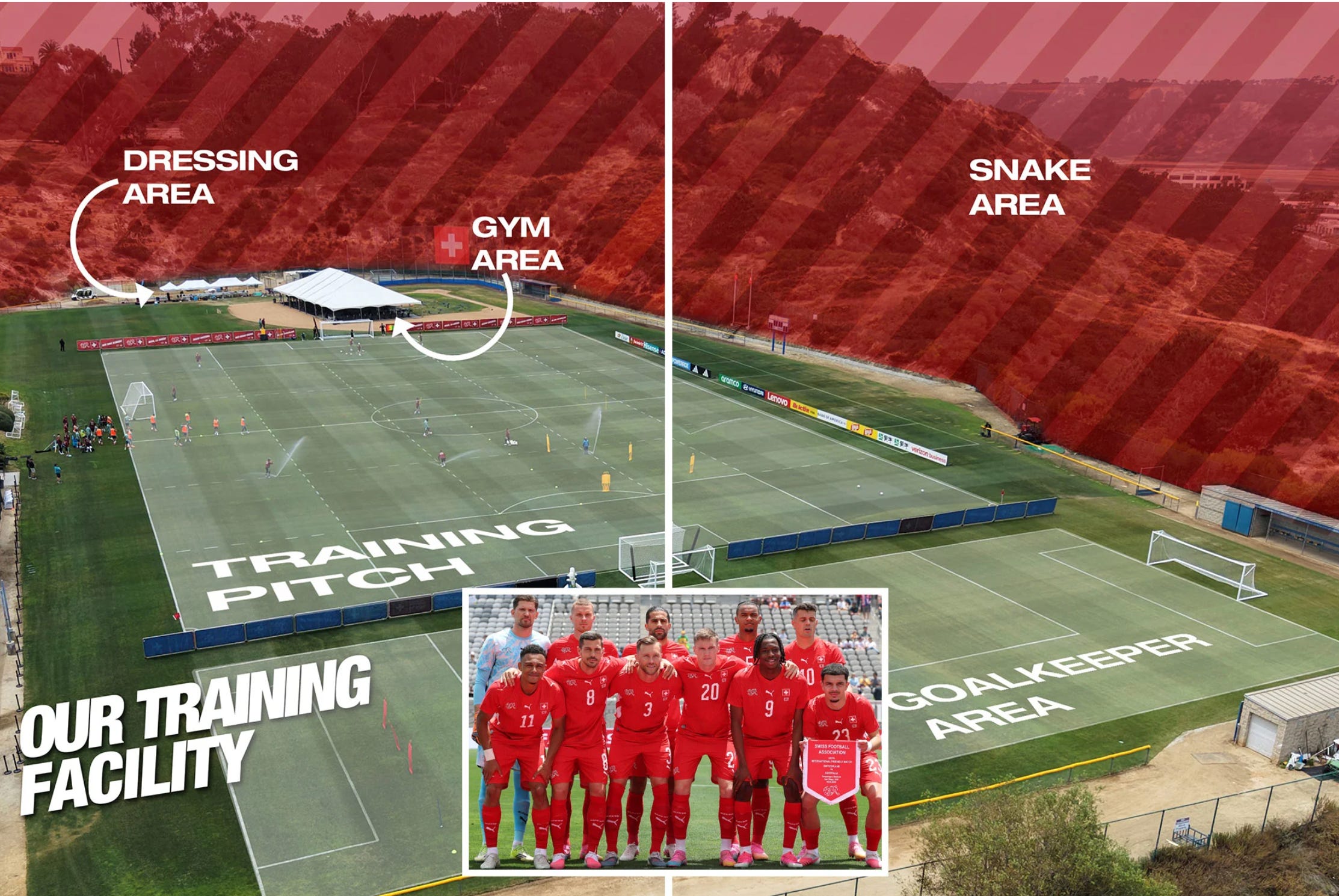
Based on some of the pre-arrival coverage, you might have expected the Swiss squad to spend training sessions dodging rattlesnakes rather than defenders. A handful of reports portrayed Southern California’s wildlife as a looming hazard, leaving the impression that the region’s reptiles posed a more immediate challenge than any opponent they’ll face this summer.
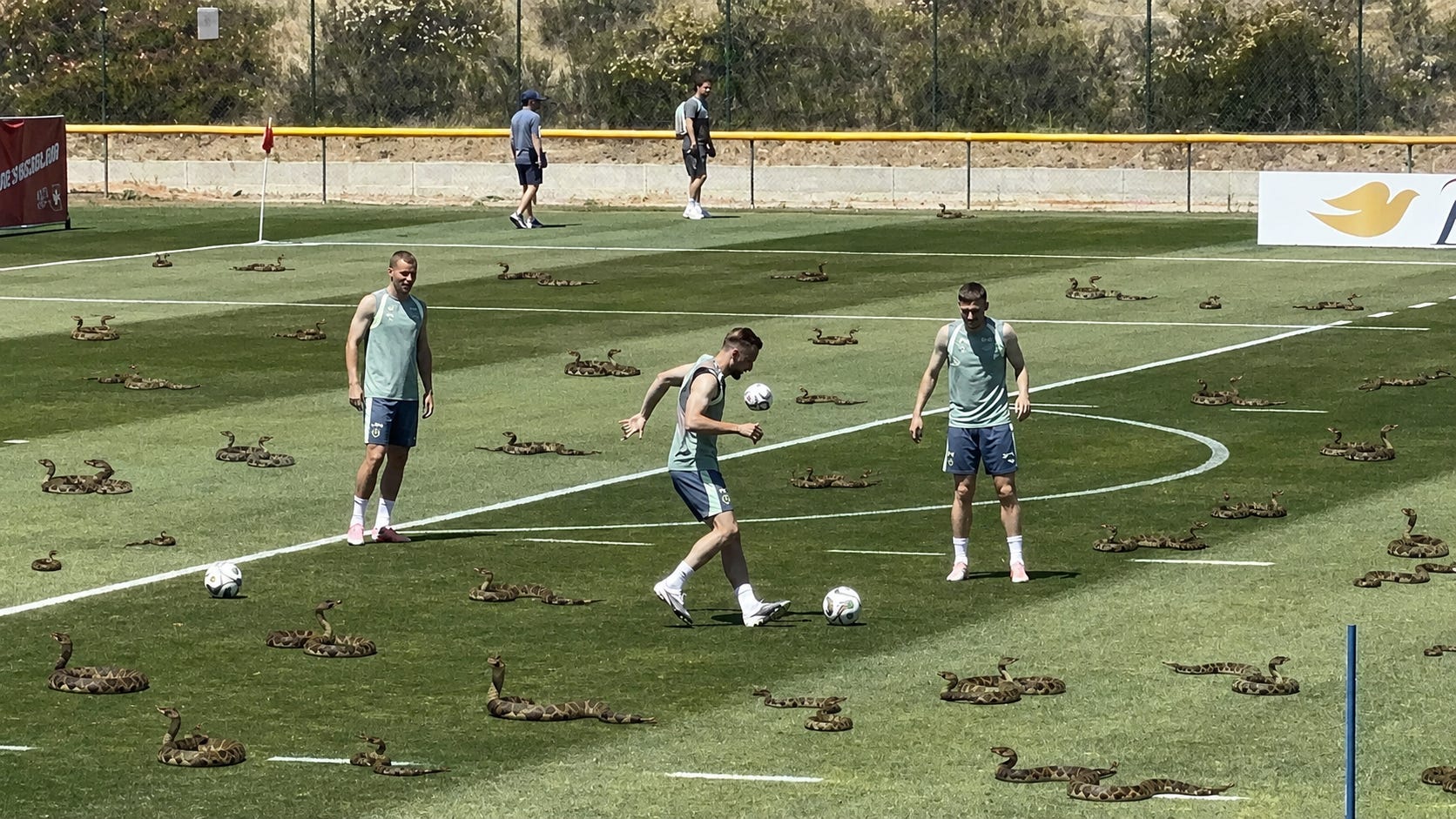
Fortunately, not a snake was in sight.
The San Diego Academy is truly something special to behold. Nestled among rolling hills and immaculately maintained grounds, the campus feels more like a private sports and wellness complex than a traditional community center. Its world-class athletic facilities, beautiful landscaping, and welcoming atmosphere make it easy to understand why an elite national team would feel comfortable training there. Beyond the fields themselves, there is a sense of community and pride throughout the property that reflects some of the very best qualities of San Diego.
For a brief afternoon, a community facility in San Diego welcomed one of the world's premier soccer programs—a reminder of how connected our city has become to international sport and culture. It is a testament to the quality of the facility that a national team preparing for the world's largest sporting event felt completely at home there.

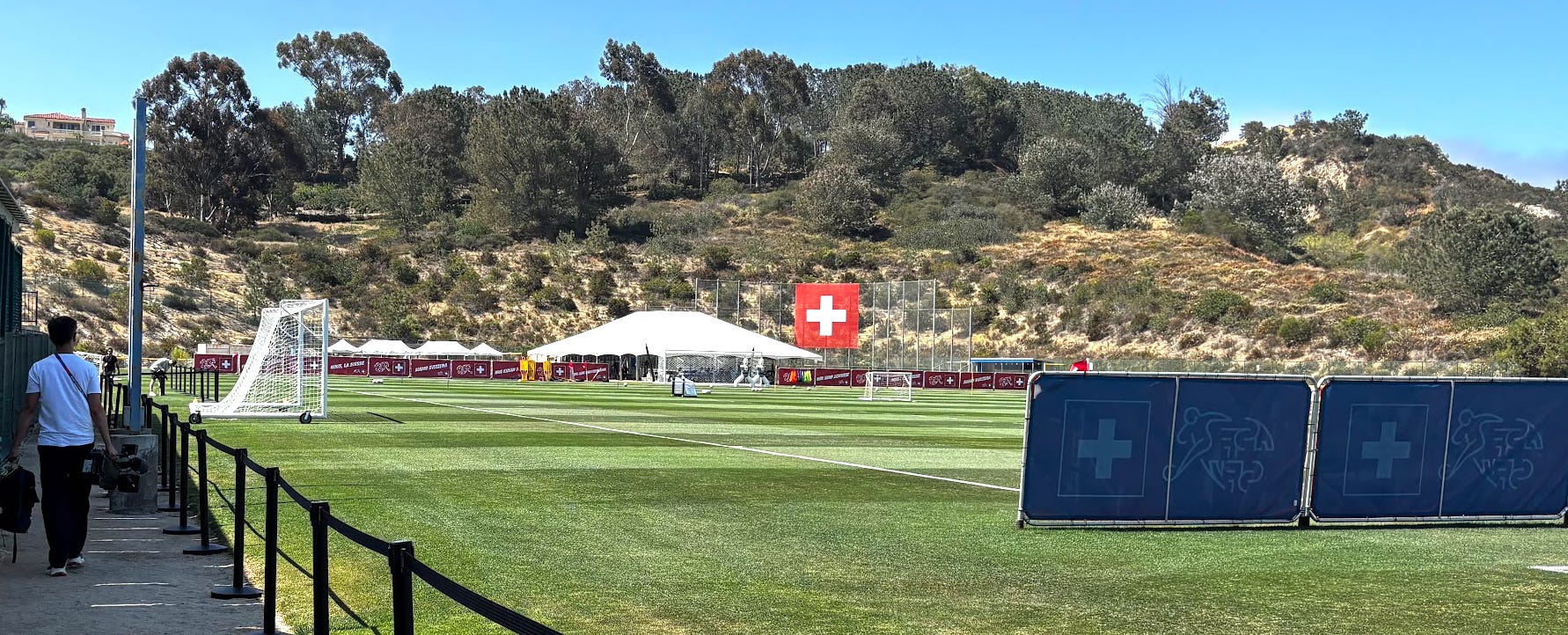
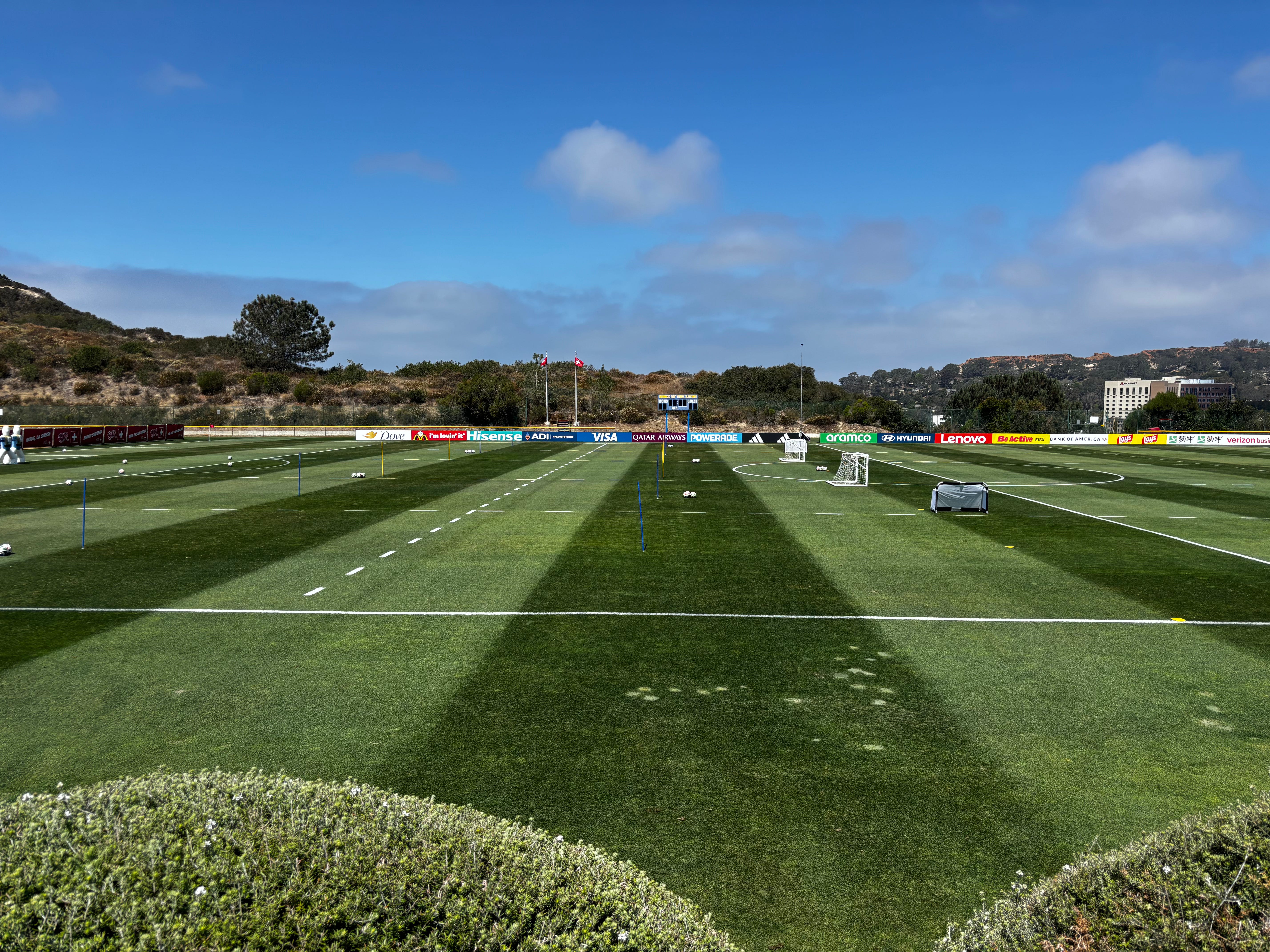
Watching them interact with teammates, coaches, and media, it struck me that these are young athletes on the verge of some of the biggest moments of their careers—performing in stadiums filled with tens of thousands of fans and before global television audiences numbering in the millions.
What impressed me most was the training efficiency. Every drill had a purpose. Every minute appeared planned. There was very little standing around, very little wasted movement, and a clear sense that every session was designed to prepare for a specific moment during a match. The professionalism was evident in everything from the training structure to the logistics surrounding the team.
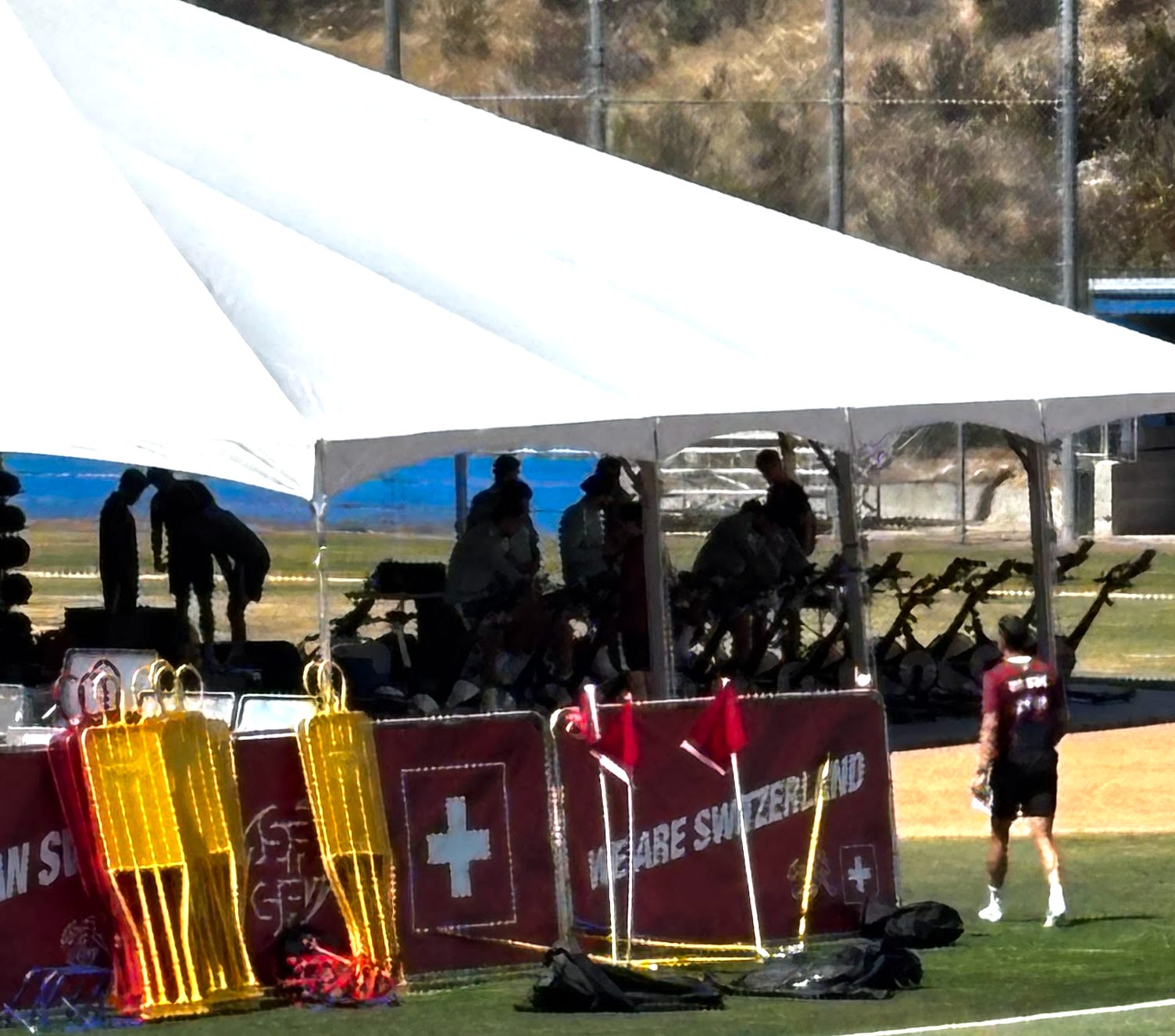
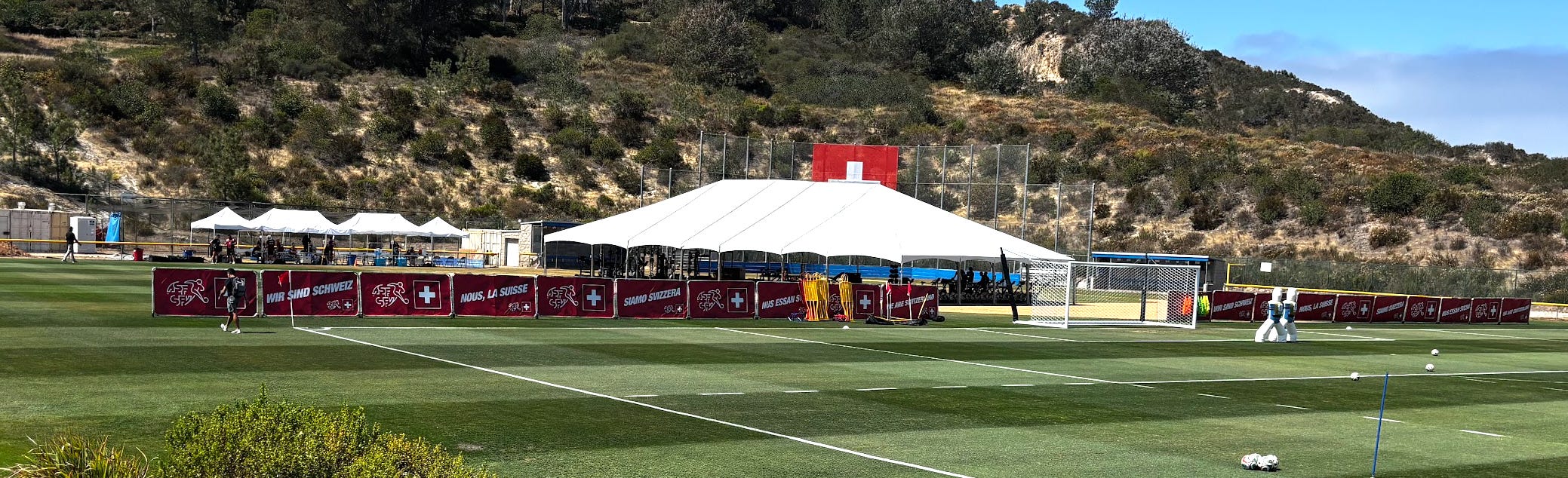
For Del Mar Life Sciences readers, there’s an interesting parallel between elite sports preparation and high-performance scientific work. Both demand meticulous attention to fundamentals, structured practice under simulated pressure, and environments that support recovery and focus. Whether you’re developing a new therapy or perfecting a set-piece, the ingredients for excellence—discipline, environment, preparation, and team cohesion—are remarkably similar.
The visit also served as a reminder of why San Diego was chosen as a World Cup training destination. Few places can match its combination of year-round sunshine, world-class accommodations, international accessibility, and relaxed coastal atmosphere. For visiting teams, the region offers an ideal environment to prepare, recover, and focus on the task ahead. If Switzerland makes a deep run in the tournament, their time training under the San Diego sun may prove to be an important part of the journey.
As Switzerland prepares for its opening World Cup match, it is hard not to appreciate the immense amount of work that goes into a single ninety-minute performance. Fans see the goals, the saves, and the final score. What they rarely see are the countless hours spent refining technique, building chemistry, recovering physically, and preparing mentally for the moments that can define a tournament.
Watching the team train in San Diego offered a glimpse into that hidden side of elite competition. If Switzerland enjoys success this summer, some small part of that achievement may have been built during a few focused days of preparation under the San Diego sun.
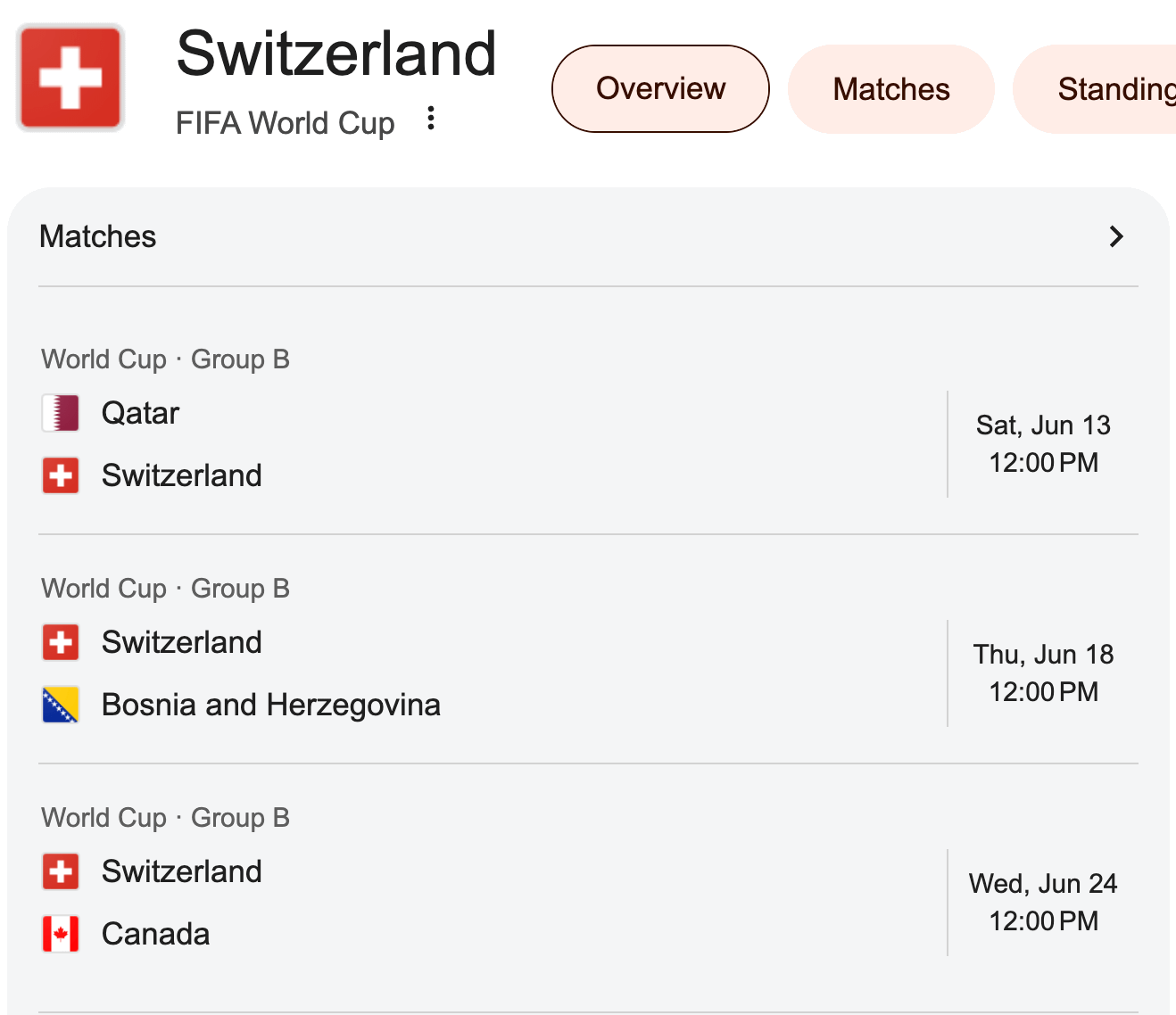
As the Swiss team heads north for its World Cup matches in Los Angeles, I will be watching with a greater appreciation for everything that happens long before kickoff. Having seen the preparation firsthand, it will be fascinating to see how the discipline, precision, and professionalism displayed in San Diego translate onto one of the biggest stages in sports.
For San Diegans, the visit was a point of pride. It showcased our region's ability to host world-class athletes and organizations while providing the environment needed to perform at the highest level. Long after the Swiss team departs for Los Angeles, what will remain is a simple lesson visible in every drill, every pass, and every interaction: excellence is rarely accidental. It is the product of preparation, discipline, and countless hours of work long before the spotlight arrives.
And for one afternoon, a community field in San Diego became a window into what it takes to compete on the world's biggest stage.